


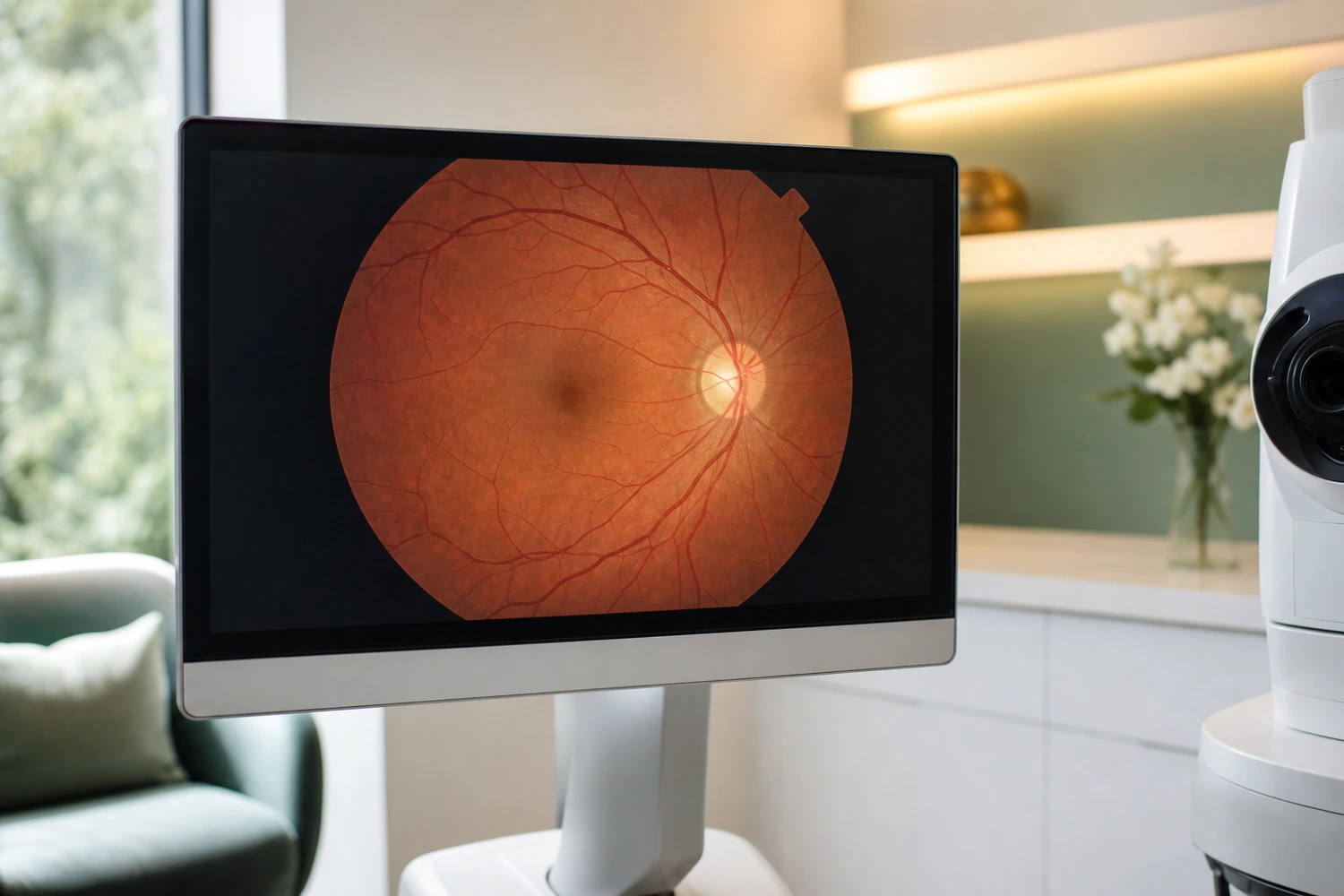
What is retinal vein occlusion?
Retinal vein occlusion happens when a vein draining blood from the retina becomes partly or completely blocked. Blood and fluid then back up into the retinal circulation, impacting the macula, the part of the retina used for detailed vision. There are two main types. Branch retinal vein occlusion affects a smaller tributary vein. Central retinal vein occlusion affects the main vein leaving the eye.
Pooled population data suggest that roughly 5 in every 1,000 adults (about 0.5%) have some form of retinal vein occlusion, equating to an estimated 16 million adults worldwide. Around four in five of these cases are branch occlusions, which usually carry a better visual outlook than central occlusions. These figures come from pooled international population studies indexed on PubMed. Retinal vein occlusion is widely described as the second most common retinal vascular disorder after diabetic retinopathy.
What are the common symptoms?
- Sudden, painless blurring or loss of vision
- Dark areas, patches or a grey haze in the vision
- New floaters or, occasionally, shadowing from bleeding
- Vision noticeably worse in one eye than the other
- Distorted straight lines, caused by macular fluid accumulation
Symptoms usually affect one eye only. Some people notice the change only when they cover the healthy eye. Any sudden visual loss should be assessed urgently, ideally within days.
What causes retinal vein occlusion?
The blockage is usually caused by a blood clot or by pressure from a stiffened neighbouring artery. Risk rises sharply with age, and most cases occur in people over 50. Common associated conditions include:
- High blood pressure, the single most frequent association
- Raised cholesterol and other lipid disorders
- Diabetes
- Less commonly, clotting or inflammatory disorders, particularly in younger patients
Because of these links, a retinal vein occlusion is also a warning sign for wider cardiovascular health. Your GP or physician may repeat blood pressure checks and blood tests.
How it's treated
Treatment focuses on clearing retinal fluid and preserving vision, most commonly with anti-VEGF injections, alongside management of any underlying blood pressure, cholesterol or blood sugar issues. Laser treatment may also be used in some cases.
Quick facts
Treatment
Anti-VEGF injections
Time
10 to 20 mins
Recovery
Same day
Anaesthetic
Local drops
Related treatments
Concerned about your vision?
Book a consultation with Mr Elhousseini for a clear diagnosis.