


What Is Micropulse Laser?
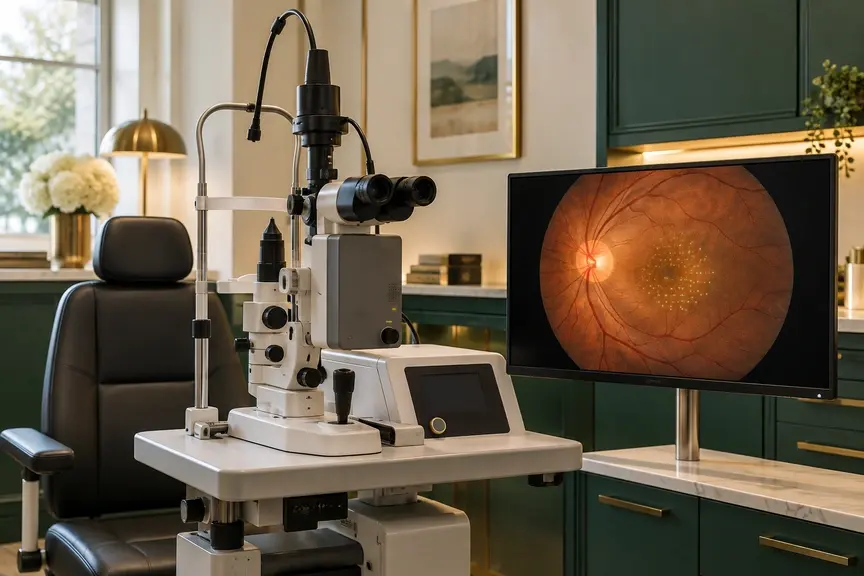
Micropulse laser is a non surgical, outpatient retinal treatment. During conventional retinal laser, a continuous beam raises the temperature of the retina enough to create a small, permanent burn. Micropulse technology divides that same energy into a train of very brief pulses, each separated by a rest period. This allows the treated tissue to cool between pulses, so the intended biological effect occurs largely within the retinal pigment epithelium, the supportive layer beneath the retina, while sparing the overlying light sensitive cells.
The aim is to encourage the retinal pigment epithelium to work more effectively at clearing excess fluid, which may reduce macular swelling over time. Because the treatment is delivered below the threshold at which a visible burn forms, it is sometimes described as subthreshold laser. No incision is made and no injection into the eye is required, so it is considered a non invasive procedure performed in a clinic setting.
Micropulse laser may be recommended on its own in selected cases, or alongside other retinal treatments such as intravitreal injections. In some patients it is used as a maintenance approach to help reduce the burden of repeated injections, where clinically appropriate. Your specialist will explain where this treatment fits into your overall care plan.
Who May Benefit From Micropulse Laser?
Suitability depends entirely on your diagnosis, the appearance of your retina on scanning, your vision and your previous treatment history. Micropulse laser may be considered for adults who have:
- Diabetic macular oedema, particularly where the swelling is mild, does not involve the centre of the macula, or persists despite other treatment
- Central serous chorioretinopathy that has not settled on its own after several months
- Macular oedema following a branch retinal vein occlusion, in selected cases
- Persistent fluid at the macula where a gentler, repeatable treatment option is preferred
- Concerns about frequent hospital visits for injections and who wish to discuss alternatives
Symptoms that often prompt a retinal assessment include blurred or distorted central vision, straight lines appearing bent or wavy, colours looking faded, a grey or dim patch in the middle of your vision, or difficulty reading small print. These symptoms can have many causes, so a specialist assessment is important before any treatment is planned. If you live with diabetes, attending your NHS diabetic eye screening appointments remains important alongside any private care.
Micropulse laser is not suitable for everyone. It is generally not appropriate where there is significant bleeding, scarring, a full thickness macular hole, advanced retinal ischaemia or new abnormal blood vessels requiring different treatment. Your clinician will advise you based on your examination and scans.
Conditions and Problems It May Address
Diabetic macular oedema
Leaking retinal blood vessels can cause fluid to collect at the macula, blurring central vision. Micropulse laser may help reduce this fluid in selected cases, often as part of a wider plan that can include blood glucose and blood pressure control, injections or conventional laser. Further information on diabetic eye disease is available from the Royal College of Ophthalmologists.
Central serous chorioretinopathy
This condition causes a pocket of fluid under the central retina, often producing distortion, a dim central patch or reduced reading vision. Many cases settle without treatment. Where fluid persists, micropulse laser may be considered as a low risk option.
Macular oedema after retinal vein occlusion
Swelling at the macula following a blocked retinal vein may respond to injections. Micropulse laser is sometimes used as an adjunct in carefully selected patients.
Potential Benefits
- It may reduce macular fluid and support stabilisation of vision over weeks to months.
- Because no visible burn is created, it may avoid the scarring and blind spots associated with older laser techniques.
- It can usually be repeated if needed, where clinically appropriate.
- It is performed in clinic, takes only a few minutes and does not involve an injection into the eye.
- In some patients it may help reduce reliance on frequent injections as part of a longer term management plan.
Results vary between individuals. Micropulse laser aims to stabilise vision and reduce swelling rather than to restore sight that has already been lost, and improvement is usually gradual rather than immediate.
Who May Benefit From Micropulse Laser?
Before any laser treatment is offered, a thorough assessment is carried out. A consultation with Mr Zine Elhousseini typically includes:
- A discussion of your symptoms, general health, diabetes control, medication and previous eye treatment
- Measurement of your vision and eye pressure
- A dilated examination of the retina using drops that blur vision temporarily
- Optical coherence tomography, a detailed scan showing fluid and retinal layers
- Retinal photography and, where indicated, fluorescein or indocyanine green angiography to map leakage
- A clear explanation of the treatment options available to you, including the benefits, risks and alternatives
You will be given time to ask questions before consenting. If micropulse laser is not the most appropriate option, alternatives such as intravitreal injections, conventional focal laser, steroid treatment, observation or surgery will be discussed.
How the Procedure Is Performed
Micropulse laser is carried out as an outpatient procedure in a clinic laser room. There is no need for a hospital stay and no general anaesthetic.
- Dilating drops are instilled, which take around twenty to thirty minutes to work.
- Anaesthetic drops numb the surface of the eye.
- A special contact lens with a clear gel is placed gently on the eye to focus the laser precisely.
- You sit at a slit lamp and are asked to keep still and look at a target light.
- The laser is applied to the treatment area, usually over a few minutes per eye.
- The lens is removed and the gel is rinsed or blinked away.
Most people find the treatment comfortable. Because the energy is delivered below the visible burn threshold, you are unlikely to see bright flashes or feel the sharp sensation associated with traditional laser.
Recovery and Aftercare
You can normally go home shortly afterwards and resume most daily activities the same day. Vision is often blurred for several hours from the dilating drops and the lubricating gel, so you should arrange transport and avoid driving until your sight returns to normal. Bright light may feel uncomfortable, and sunglasses can help.
No eye drops are usually needed afterwards, although your clinician will advise if anything is required. A follow up appointment with repeat scanning is typically arranged after a number of weeks to assess the response, as the effect on macular fluid builds gradually. Treatment can often be repeated if the response is partial.
Seek prompt advice if you notice significant pain, a sudden drop in vision, new floaters or flashing lights, or a shadow across your vision, as these symptoms need urgent assessment.
Risks and Considerations
Micropulse laser is generally considered low risk compared with conventional laser, but no treatment is without limitations. Points to be aware of include:
- The swelling may not improve, and further or alternative treatment may be needed
- Vision may not improve, and the aim is often stabilisation rather than recovery of lost sight
- Temporary blurring, light sensitivity or a gritty sensation from the contact lens gel
- Rarely, if settings are too high, an inadvertent visible burn can occur
- Relying on laser alone could delay more effective treatment in some conditions
- Underlying factors such as blood glucose, blood pressure and cholesterol control still need attention
Evidence for subthreshold laser continues to develop, and it is not appropriate for every type of macular disease. Guidance from NICE and the Royal College of Ophthalmologists informs how retinal treatments are selected in UK practice.
Why Consider Mr Zine Elhousseini?
Mr Zine Elhousseini is a Consultant Ophthalmic Surgeon holding a Doctor of Medicine degree, along with MRCSEd and FRCOphth. His subspecialty interests cover surgical retina, medical retina and cataract surgery, including vitreoretinal surgery, diabetic retinopathy care and refractive lens exchange.
He has performed more than ten thousand procedures, is highly experienced in complex cataract surgery, and is trusted by colleagues for second opinions and the management of surgical complications. His practice is built on compassionate, patient centred care, honest discussion of options and clinical integrity. You can read more about Mr Zine Elhousseini and his approach to retinal care.
Micropulse Laser Treatment in London
Consultations and micropulse laser treatment are available in London, with patients also travelling from surrounding areas of the South East and Greater London for retinal assessment and second opinions. Appointments are arranged privately, with clear information provided on fees and what each stage of your care involves.
Frequently Asked Questions
Is micropulse laser painful?
Most patients describe it as comfortable. Anaesthetic drops are used and the subthreshold energy levels mean the sensation is usually much milder than traditional retinal laser.
How long does the procedure take?
The laser itself usually takes only a few minutes per eye. Allow around an hour and a half in clinic to include dilating drops, scans and recovery.
How soon will I notice a difference?
Any improvement in macular fluid tends to develop gradually over several weeks. Scans at your follow up appointment help assess the response objectively.
Will I need more than one session?
Possibly. Micropulse laser can often be repeated safely if the response is partial, and your clinician will advise based on your scans.
Are there alternatives?
Yes. Depending on your diagnosis these may include intravitreal injections, conventional focal laser, steroid treatment, careful observation or surgery. All appropriate options will be discussed with you.
Can I drive afterwards?
Not immediately. Your vision will be blurred from dilating drops, so please arrange alternative transport home.
FROM
£POA per session
Procedure time
A few minutes per eye
Anaesthetic
Local (drops)
Recovery
Same day
Hospital stay
Outpatient
Book a Consultation
To find out whether micropulse laser treatment may be suitable for your condition, arrange a retinal assessment with Mr Zine Elhousseini in London. You will receive a clear explanation of your diagnosis, your options and the likely benefits and risks before any decision is made. Please contact the clinic to book your consultation.