


What Is Retina Laser Treatment (PRP/PDT)?
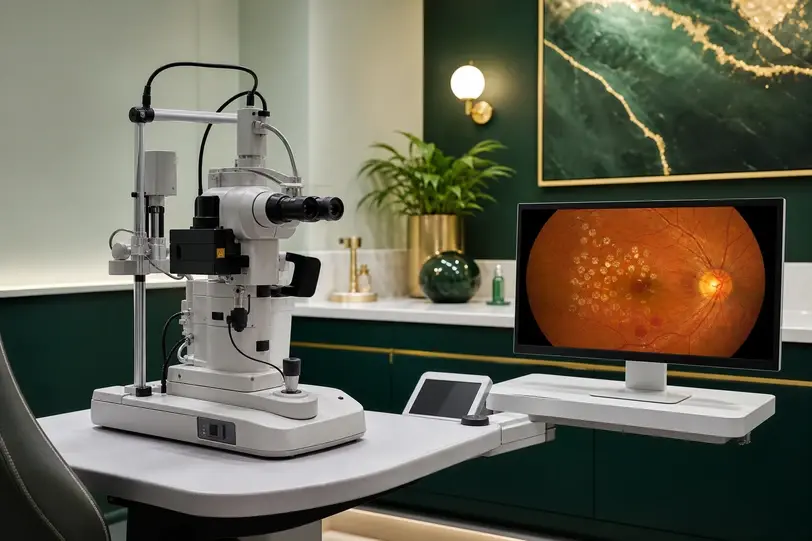
Retina laser treatment covers three distinct light-based procedures used to protect the retina: Panretinal photocoagulation (PRP), Photodynamic therapy (PDT), and Micropulse laser therapy. All are non-surgical, outpatient procedures aimed at stabilising and preserving vision.
Panretinal photocoagulation (PRP)
PRP uses a focused laser beam to apply many small treatment spots to the peripheral retina. The aim is to reduce the amount of oxygen-starved retinal tissue that drives the growth of fragile new blood vessels. By calming this process, PRP may reduce the risk of vitreous haemorrhage, tractional retinal detachment and certain forms of glaucoma. It is a well-established treatment for proliferative diabetic retinopathy and is described in guidance from NICE and the NHS.
Photodynamic therapy (PDT)
PDT combines a light-sensitive medicine, verteporfin, given through a vein in the arm, with a low-energy laser applied to a carefully mapped area of the retina. The light activates the medicine only where it is directed, which may help close abnormal or leaking vessels while limiting damage to surrounding tissue. PDT is used far more selectively than PRP and is generally reserved for specific macular and choroidal conditions.
Micropulse laser therapy
Micropulse laser is an advanced, tissue-sparing sub-threshold laser technology. It delivers microsecond bursts of low-energy laser interspersed with cooling intervals, stimulating retinal pigment epithelial cell function without causing thermal tissue damage or scarring. It is particularly effective for central serous chorioretinopathy (CSCR) and persistent macular oedema close to the fovea.
Who May Benefit From Retina Laser Treatment?
A specialist retinal assessment may be advised if you notice new floaters or cobweb-like shapes, sudden blurring or a curtain-like shadow, straight lines appearing wavy, a grey patch in your central vision, or gradual visual change alongside diabetes or high blood pressure. Some patients are referred following diabetic eye screening before symptoms appear, as early retinopathy can be silent. Prompt assessment matters, since laser is more effective at preventing further loss than restoring vision already lost.
How the Treatment Is Performed
PRP is carried out in a clinic laser room using anaesthetic drops and a contact lens to focus the laser, often across two or more sessions of fifteen to thirty minutes each. PDT begins with a verteporfin infusion into a vein in the arm, followed by a low-energy laser applied through a contact lens for around eighty seconds; the procedure itself is generally painless, though you will need to avoid bright light for a couple of days afterwards.
Recovery After Treatment
Both procedures are day-case treatments. Expect blurred vision for several hours, a mild ache that usually settles with simple pain relief, and no driving on the day of treatment. Most people return to daily activities within a day or two, with follow-up imaging to check the response and further sessions arranged where needed.
FROM
£POA per session
Procedure time
15–30 mins
Anaesthetic
Local (drops)
Recovery
1–2 days
Hospital stay
Outpatient