


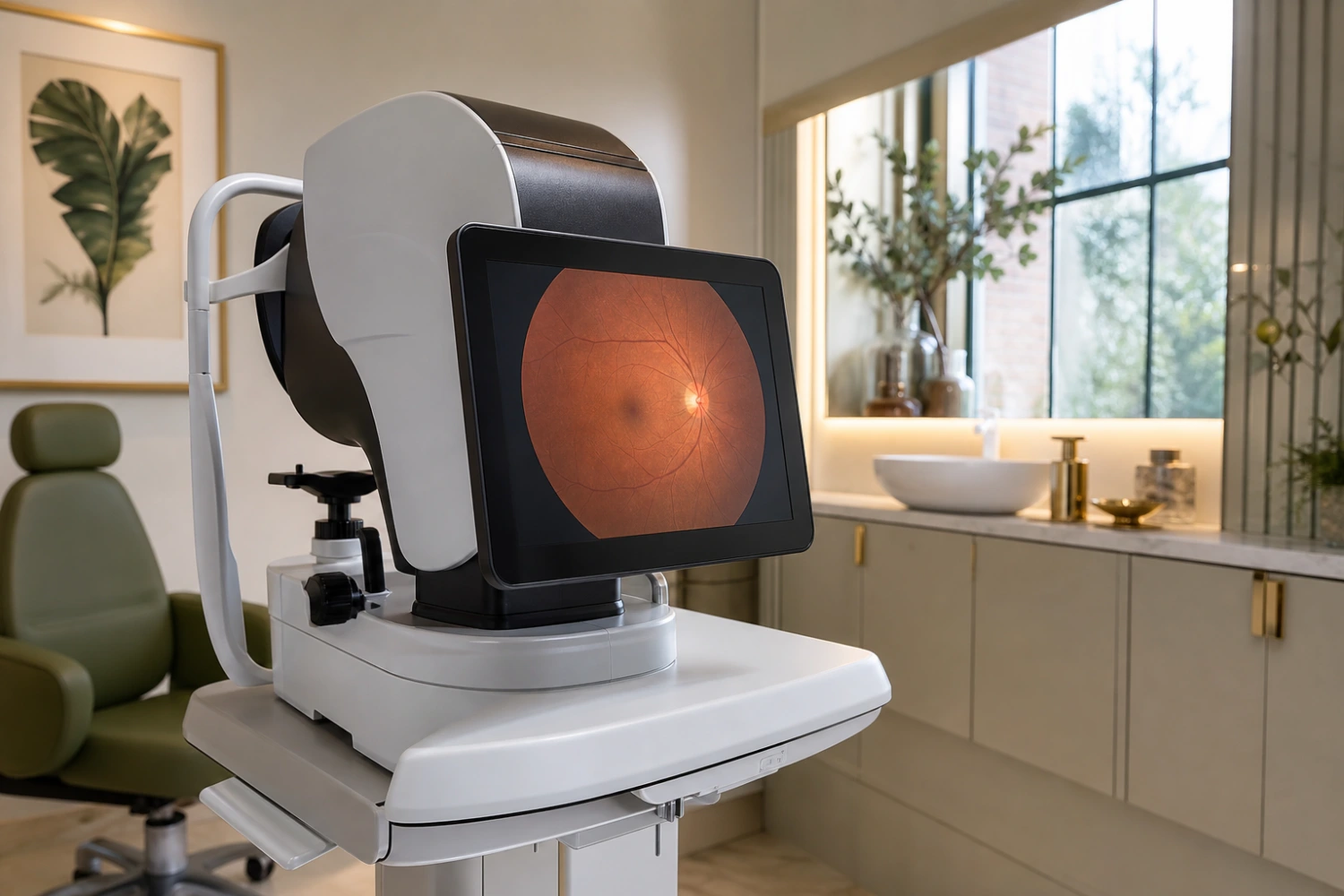
What is a retinal tear?
The retina works like the film in a camera. It converts light into signals that travel to the brain. A retinal tear is a break in this delicate layer, most often near the edge (the peripheral retina). It is frequently an early warning sign rather than the final problem. Once a tear forms, watery vitreous fluid can seep through it and lift the retina away from its blood supply. That process is retinal detachment.
Because a tear can be painless, it is often found only when someone reports new visual symptoms or attends a routine examination. Sealing the tear early is far simpler than repairing a detached retina.
What are the symptoms of a retinal tear?
- Sudden new floaters, often described as specks, cobwebs or a swarm of dots
- Flashes of light, particularly in dim conditions or when moving the eyes
- A shadow or curtain spreading in from the edge of vision
- Blurred or distorted central vision
- Sometimes no symptoms at all
Symptoms do not reliably indicate how serious the problem is. A large tear may cause few symptoms, while a harmless age related change can cause many floaters. Only a dilated retinal examination can tell the difference.
What causes a retinal tear?
Most tears begin with a posterior vitreous detachment (PVD). The gel that fills the eye shrinks with age and separates from the retinal surface. Occasionally it tugs firmly enough at a weak point to tear the retina. Research summarised in studies indexed on PubMed suggests that around 10 to 15 per cent of people attending with a symptomatic acute posterior vitreous detachment (PVD) are found to have a retinal tear at first examination. That is why urgent assessment matters.
Recognised risk factors include:
- Short sightedness (myopia), especially moderate to high degrees
- Previous eye trauma or blunt injury
- Recent cataract surgery or other intraocular surgery
- A retinal tear or detachment in the other eye
- A family history of retinal detachment
- Thinning of the peripheral retina, such as lattice degeneration
For context, the NHS notes that retinal detachment affects roughly 1 in 10,000 people in the UK each year. It remains uncommon, yet it is a genuine emergency when it happens, and most cases start with a tear or hole.
How it's treated
Retinal tears are usually treated promptly with laser retinopexy, which seals the edges of the tear to stop fluid passing behind the retina and causing it to detach.
Quick facts
Treatment
Laser retinopexy
Time
15 to 20 mins
Recovery
Mild restrictions for 4 weeks
Anaesthetic
Local drops
Related treatments
Concerned about your vision?
Book a consultation with Mr Elhousseini for a clear diagnosis.