


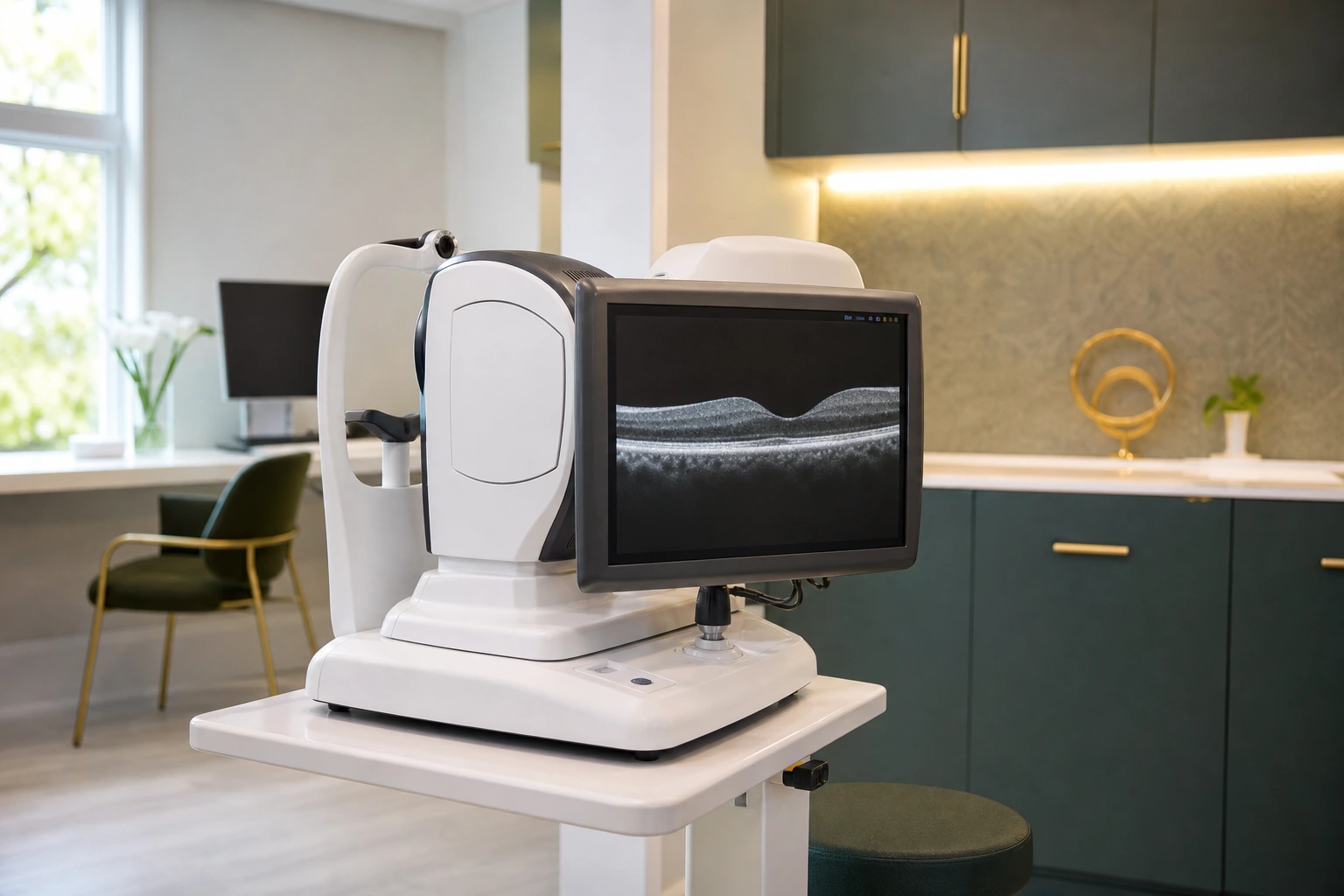
What is an epiretinal membrane?
An epiretinal membrane is a thin, scar-like layer of tissue that forms on the surface of the retina, gently puckering or distorting it. The retina is the light-sensitive lining at the back of the eye, and the macula at its centre handles detailed vision for reading, faces and screens. When a membrane contracts over the macula, it wrinkles this delicate tissue, so images arriving at the brain are no longer perfectly flat or sharp.
The condition is common with age. Population based studies of adults over 50, indexed on PubMed, have reported epiretinal membranes in roughly 7 in every 100 eyes examined, with prevalence rising in later decades. Around one in five people with a membrane in one eye eventually develops changes in the other eye, which is why both eyes are assessed at every visit.
What are the common symptoms?
- Blurred or distorted central vision
- Straight lines appearing wavy or bent (metamorphopsia)
- Difficulty reading fine print, price labels or subtitles
- Mild double vision in one eye
- A sense that the affected eye's image is larger than the other
Symptoms are usually gradual rather than sudden. Many people notice the change only when they cover the better eye. Peripheral vision is typically unaffected, and an epiretinal membrane does not cause pain or redness.
What causes an epiretinal membrane?
Most cases develop as part of the natural ageing process.
How it's treated
Mild cases are simply monitored, as many don’t progress. Where vision is significantly affected, the membrane is removed surgically through vitrectomy, gently peeling it away from the retinal surface.
Quick facts
Treatment
Vitrectomy (membrane peel)
Time
30 to 60 mins
Recovery
1 to 4 weeks
Anaesthetic
Local or general
Related treatments
Concerned about your vision?
Book a consultation with Mr Elhousseini for a clear diagnosis.