


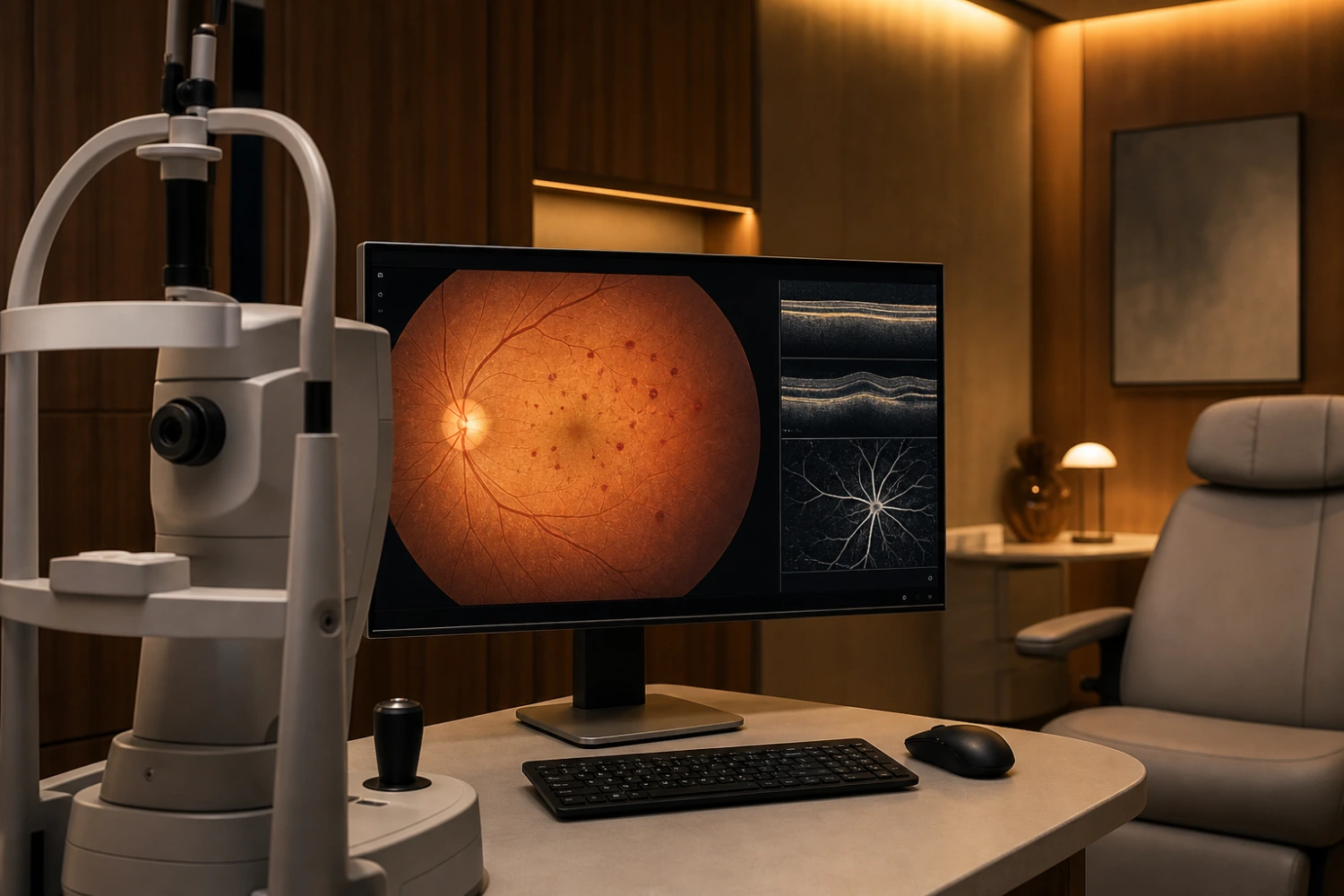
What is diabetic retinopathy?
Diabetic retinopathy is damage to the blood vessels of the retina caused by consistently high blood sugar levels. It is one of the most common complications of diabetes and, left unmanaged, can lead to serious vision loss. The retina lines the back of the eye and converts light into the signals your brain reads as vision. When its tiny vessels leak or close off, the retina swells or becomes starved of oxygen.
Scale matters here. According to Diabetes UK, around 4.6 million people in the UK live with diagnosed diabetes, and the number continues to rise. Research summarised by the Royal College of Ophthalmologists shows that retinopathy remains a leading cause of certifiable sight loss in working age adults. Anyone with type 1 or type 2 diabetes can be affected, which is why structured screening exists across the NHS.
Doctors describe the condition in stages. Background (non-proliferative) retinopathy involves small leaks and microaneurysms. Maculopathy means fluid has collected at the centre of the retina. Proliferative retinopathy means fragile new vessels have grown, and these can bleed. Each stage has a different follow-up interval and a different treatment plan.
What are the common symptoms?
Early disease often causes no symptoms at all. Vision can stay sharp while significant changes develop at the back of the eye. Symptoms to report promptly include:
- Blurred or fluctuating vision
- Dark spots or floaters
- Patchy or missing areas of vision
- Poor night vision
- Difficulty reading small print or recognising faces
- Sudden vision loss in advanced cases
Sudden painless loss of vision, or a sudden shower of floaters, may signal a vitreous haemorrhage. This needs same day advice from an eye specialist.
What causes diabetic retinopathy?
Long-term high blood sugar damages the small blood vessels feeding the retina, causing them to leak, swell, or grow abnormally. In advanced (proliferative) cases, these fragile new vessels can bleed into the eye. Scar tissue may then pull on the retina and cause tractional detachment.
Several factors raise the risk:
- Longer duration of diabetes, whether type 1 or type 2
- Higher average blood glucose, reflected in HbA1c results
- Raised blood pressure and raised cholesterol
- Smoking
- Kidney disease
- Pregnancy, which can accelerate existing retinopathy
How is diabetic retinopathy treated in London?
Treatment depends on severity, from regular monitoring in early stages, to anti-VEGF injections and laser treatment for swelling and abnormal vessels, through to surgery if bleeding or scarring threatens vision. As of 2026, diabetic retinopathy treatment in London is highly personalised, guided by OCT scans and imaging at every visit.
- Monitoring and risk control: for mild disease, closer surveillance plus better glucose, blood pressure and lipid control.
- Anti-VEGF injections: given into the eye to reduce macular swelling and calm abnormal vessels. NICE has appraised anti-VEGF medicines for diabetic macular oedema, and treatment usually starts as a course of injections with regular review.
- Steroid treatment: considered in selected eyes where injections alone have not controlled swelling.
- Focal or grid laser: used to seal leaking vessels away from the centre of the macula.
- Panretinal photocoagulation: laser for proliferative disease. Landmark clinical trials indexed on PubMed showed this approach roughly halves the risk of severe sight loss in eyes with high risk proliferative retinopathy.
- Vitrectomy surgery: for persistent bleeding into the vitreous gel, or when scar tissue pulls on the retina.
Every option carries benefits and risks, including infection, raised pressure and treatment related visual change. Mr Zine Elhousseini will discuss these with you, alongside how many visits to expect. You can read more about non-surgical retinal care on the medical retinal conditions page, and about theatre based care under vitreoretinal surgery.
Quick facts
Treatment
Varies by severity
Time
Varies
Recovery
Varies
Anaesthetic
Varies
Related treatments
Concerned about your vision?
Book a consultation with Mr Elhousseini for a clear diagnosis.