


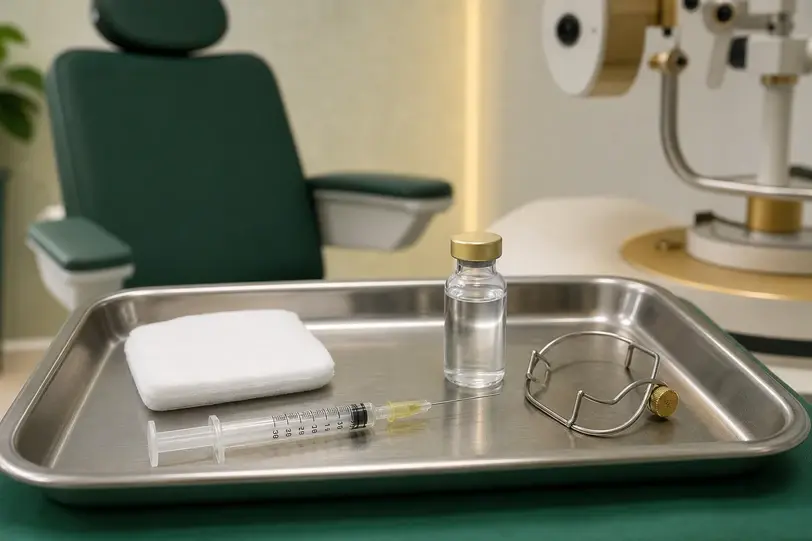
What Are Intravitreal Injections?
An intravitreal injection delivers a small amount of medication directly into the vitreous, the clear gel at the back of the eye, reaching the retina in concentrated form while keeping exposure to the rest of the body low. Treatments fall into two main groups: anti-VEGF medicines, which reduce abnormal, leaky blood vessel growth, and corticosteroid preparations for certain types of retinal swelling or inflammation. Most conditions require a course of treatment, often starting with monthly loading injections followed by a personalised maintenance schedule.
Who May Benefit From Injection Treatment?
Injection therapy may help if you have blurred or distorted central vision, a grey or missing patch in the centre of your sight, difficulty reading or recognising faces, washed-out colours, a sudden change in vision in one eye, or new or worsening vision problems linked to diabetes. A sudden change in vision should always be assessed promptly, as some conditions respond better when treatment begins early.
Conditions We Treat
- Intravitreal injections are used for a defined group of retinal conditions:
- Wet age-related macular degeneration (AMD)
- Diabetic macular oedema (DMO)
- Proliferative diabetic retinopathy
- Retinal vein occlusion (RVO)
- Myopic choroidal neovascularisation (CNV)
- Macular oedema linked to inflammation or retinal vascular disorders
How the Procedure Is Performed
Although an eye injection may sound concerning or painful, most patients report that the procedure is nearly painless.
Anaesthetic drops numb the surface of the eye, which is then cleaned with an antiseptic solution. The medication is injected through the white of the eye using a very fine needle, away from the visual axis, and your eye is checked before you go home with aftercare advice. The injection itself takes only seconds, and the full appointment usually takes twenty to thirty minutes. You will need to arrange transport, as you must not drive until your vision has settled.
Recovery After Treatment
Recovery is usually straightforward. You may notice mild grittiness, a red patch where the needle entered, new floaters, or temporary blurring for a day or two, with most people back to normal activities the following day. Follow-up appointments with OCT scanning let your consultant assess your response and adjust treatment intervals, an approach known as treat and extend.
FROM
£POA per injection
Procedure time
20–30 mins
Anaesthetic
Local (drops)
Recovery
1–2 days
Hospital stay
Outpatient