


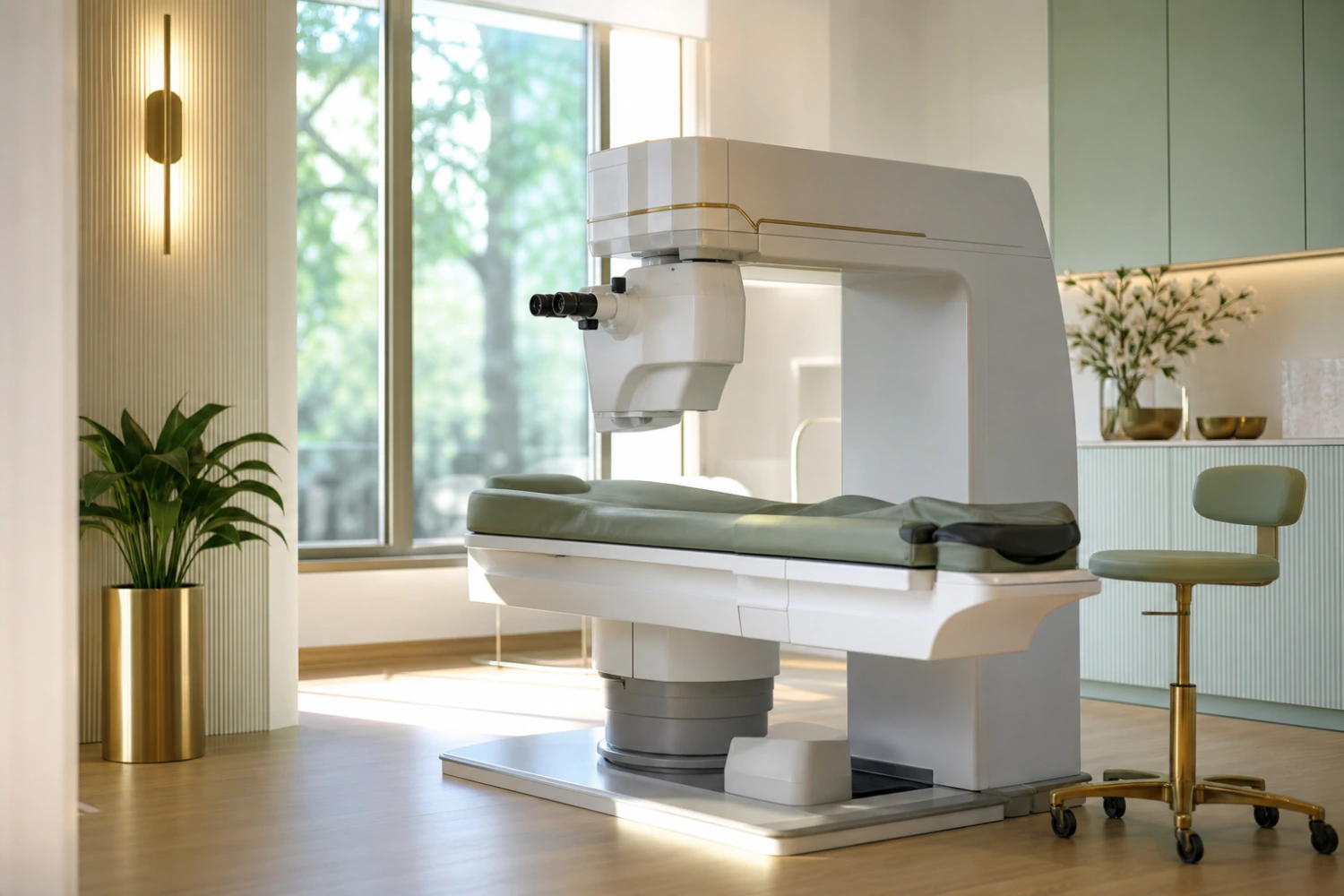
What is laser eye surgery?
Laser eye surgery is a group of procedures that use laser technology to reshape the cornea, the clear front window of the eye. Changing the corneal curvature alters how light focuses on the retina. This corrects common refractive errors and reduces or removes the need for glasses or contact lenses. Three techniques are offered here. The right one depends on your prescription, corneal thickness, tear film and lifestyle.
- LASIK: a thin corneal flap is created, then the tissue beneath is reshaped.
- Trans-PRK: the surface layer (epithelium) is removed by the excimer laser itself, with no flap.
- LASEK: alcohol solution is used to lift and move the epithelium before reshaping.
Who is laser eye surgery in London suitable for?
Suitability is decided at a detailed assessment, not online. In general, treatment is considered for adults aged 18 and over whose glasses prescription has been stable for at least two years. Healthy corneas of adequate thickness are also required. Laser treatment can address the following:
- Myopia (short-sightedness): distance vision is blurred because the eye is too long. Flattening the cornea brings distance objects back into focus.
- Hyperopia (long-sightedness): light focuses behind the retina, so near tasks feel harder. Correction can reduce reliance on reading glasses.
- Presbyopia: an age-related loss of near focus as the natural lens stiffens, usually noticed from the mid-forties. It may be managed with excimer laser techniques or with refractive intraocular lenses.
- Astigmatism: an irregular corneal or lens shape distorts vision at all distances. LASIK or surface laser reshapes the cornea precisely to correct it.
Laser surgery may not be advised during pregnancy or breastfeeding, or if you have keratoconus, significant dry eye, or certain corneal, retinal or autoimmune conditions. Mr Zine Elhousseini will discuss alternatives if you are not a candidate, including refractive lens exchange surgery.
The procedure
LASIK, from £1,700 per eye, reshapes the cornea by creating a corneal flap, correcting short-sightedness, long-sightedness and astigmatism. Trans-PRK, from £1,700 per eye, reshapes the corneal surface without creating a flap, making it suitable for thinner corneas the epithelium is removed using the excimer laser for a quicker, more precise result. LASEK, from £1,700 per eye, reshapes the cornea using alcohol to move the epithelium. All three are day-case procedures under local anaesthetic drops.
Recovery
LASIK has the fastest recovery, with clear vision often achieved within a day and most normal activities resumed within days. Trans-PRK and LASEK involve a longer healing period, as the surface layer of the cornea needs to regrow, vision can be blurred or uncomfortable for several days, with LASEK typically the slowest to settle, taking up to two weeks. A protective eye shield is worn at night for the first few days, and swimming, eye make-up and strenuous exercise should be avoided until cleared at your follow-up appointment.
FROM
£1,700 per eye
Procedure time
15 to 20 mins
Anaesthetic
Local drops
Recovery
1 day to 1 week
Hospital stay
Day case